TPO's pros, cons, and whether it fits your building
Understanding TPO fully means weighing its strengths and weaknesses and considering whether it fits a particular building, since being the most popular membrane does not make it right for every Devon roof. A balanced view helps an owner decide.
TPO's strengths
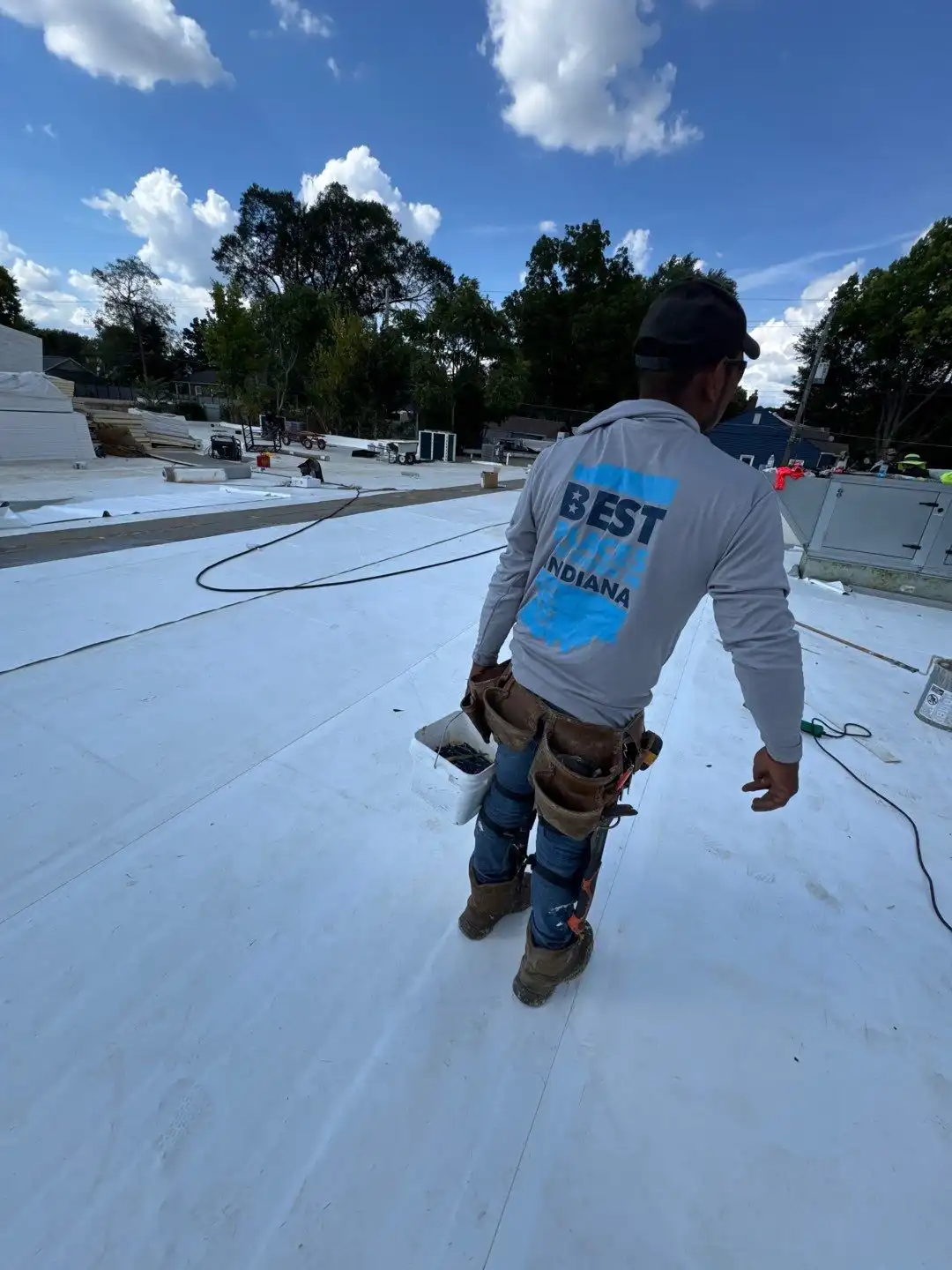
TPO's main strengths are its reflective white surface that reduces cooling costs, its strong welded seams that create a continuous watertight bond, its reasonable cost, and its solid lifespan past twenty years. It is also relatively lightweight and efficient to install. For a building, these strengths make TPO an excellent fit on clean, simple roofs where energy efficiency and value matter, which describes a great many commercial roofs and explains TPO's popularity.
TPO's limitations
TPO is not without limitations. It does not resist grease and certain chemicals as well as PVC, so it is a poor fit for restaurants and process buildings with that exposure. Its performance also depends heavily on installation quality, since poor welds undermine it. And as a single ply membrane, it relies on that one layer rather than the redundancy of multi ply systems. For a Marion County building, these limitations matter where the building's exposure or needs fall outside what TPO does well.
Where TPO is the right choice
TPO is the right choice for clean, simple commercial roofs without grease or chemical exposure, where its reflective cooling, welded durability, and reasonable cost shine. A Devon warehouse, office, retail building, or similar structure with a standard roof is prime TPO territory. For these buildings, TPO offers the best balance of performance and value among the options, which is why it is so often the sensible choice.
Where another system may fit better
TPO is not always the best fit. A building with grease or chemical exposure is better served by PVC, a building in a very cold climate prioritizing proven durability might prefer EPDM, and a building wanting maximum longevity over decades might choose metal. For a building whose needs fall outside TPO's strengths, another system may offer better value, which is why matching the membrane to the building matters more than defaulting to the popular choice.
Judging TPO for your roof
Whether TPO is right comes down to whether your building fits its strengths, a clean, simple roof without special exposure, and how it compares to the alternatives for your situation. On most ordinary commercial roofs, TPO is an excellent, well rounded choice, while on buildings with special needs, another system may serve better. Understanding TPO's pros and cons lets a Marion County owner make that judgment knowledgeably.
Find out if TPO is right for you
It also helps to remember that with TPO, more than with some systems, the installation determines the outcome, because the membrane's potential depends on properly welded seams and careful detailing. A Marion County owner who prioritizes a skilled, experienced installer gets the full value TPO can offer, while one who chooses purely on price may get a membrane that fails early through poor welds. Understanding that the installation matters as much as the membrane is among the most useful things an owner can take from learning about TPO.
The broader point about understanding TPO is that knowing what a membrane is and how it works lets an owner make a roofing decision rather than simply accept the default. A Devon owner who understands TPO's reflective surface, welded seams, lifespan, and cost can judge whether it fits the building, ask the right questions of a contractor, and recognize a quality installation from a rushed one. That understanding turns the most common membrane from a label into a choice the owner can evaluate on its merits.
Finally, whether TPO is the right choice comes down to the building, since the most popular membrane is not automatically the best for every roof. A owner who weighs TPO's strengths against the building's actual exposure and needs, and compares it honestly to the alternatives, makes a better decision than one who picks TPO simply because it is common. The membrane that fits the building is the right one, and understanding TPO is what lets an owner judge whether it is that membrane for their roof.
It also helps to remember that with TPO, more than with some systems, the installation determines the outcome, because the membrane's potential depends on properly welded seams and careful detailing. A Marion County owner who prioritizes a skilled, experienced installer gets the full value TPO can offer, while one who chooses purely on price may get a membrane that fails early through poor welds. Understanding that the installation matters as much as the membrane is among the most useful things an owner can take from learning about TPO.
The broader point about understanding TPO is that knowing what a membrane is and how it works lets an owner make a roofing decision rather than simply accept the default. A Devon owner who understands TPO's reflective surface, welded seams, lifespan, and cost can judge whether it fits the building, ask the right questions of a contractor, and recognize a quality installation from a rushed one. That understanding turns the most common membrane from a label into a choice the owner can evaluate on its merits.
Finally, whether TPO is the right choice comes down to the building, since the most popular membrane is not automatically the best for every roof. A owner who weighs TPO's strengths against the building's actual exposure and needs, and compares it honestly to the alternatives, makes a better decision than one who picks TPO simply because it is common. The membrane that fits the building is the right one, and understanding TPO is what lets an owner judge whether it is that membrane for their roof.
It also helps to remember that with TPO, more than with some systems, the installation determines the outcome, because the membrane's potential depends on properly welded seams and careful detailing. A Marion County owner who prioritizes a skilled, experienced installer gets the full value TPO can offer, while one who chooses purely on price may get a membrane that fails early through poor welds. Understanding that the installation matters as much as the membrane is among the most useful things an owner can take from learning about TPO.
Finally, whether TPO is the right choice comes down to the building, since the most popular membrane is not automatically the best for every roof. A owner who weighs TPO's strengths against the building's actual exposure and needs, and compares it honestly to the alternatives, makes a better decision than one who picks TPO simply because it is common. The membrane that fits the building is the right one, and understanding TPO is what lets an owner judge whether it is that membrane for their roof.
Devon Commercial Roofing helps Devon owners weigh TPO's strengths and limitations against their building and decide whether it fits. Call (765) 676-3491 to find out whether TPO is the right membrane for your roof. Matching the membrane to the building is what separates a smart investment from an expensive guess.